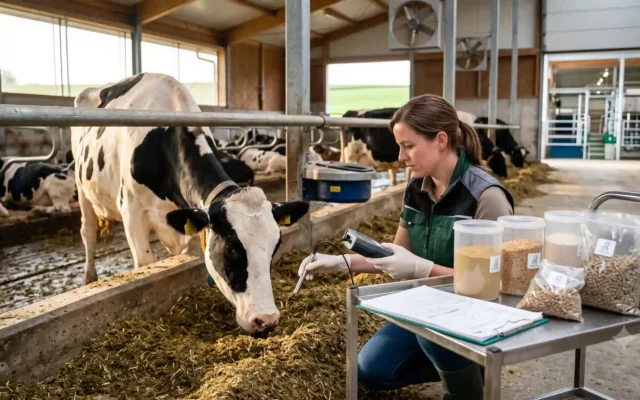
Proper nutrition is essential for maintaining the health, growth, productivity, and overall well-being of animals. While feed forms the main part of an animal’s diet, supplements help provide specific nutrients that may be insufficient in the regular feed.
What is Animal Feed?
Animal feed is the main source of energy and nutrients provided to animals. It generally includes ingredients such as grains, bran, forage, oil cakes, protein sources, and other feed materials.
Feed supplies the basic nutrients required for daily activities, maintenance, growth, reproduction, and production. The quantity and composition of feed depend on the animal’s species, age, body condition, and production level.
What is an Animal Supplement?
An animal supplement is a product given in addition to the regular feed to provide specific nutrients or functional ingredients.
Supplements may contain nutrients such as calcium, phosphorus, vitamins, minerals, amino acids, or other functional ingredients. They are generally used when the regular diet does not provide enough of a particular nutrient or when additional nutritional support is required.
For example, dairy animals with high milk production may have greater nutritional demands, making adequate mineral and vitamin intake particularly important.
Feed vs Supplement: What’s the Difference?
The simplest way to understand the difference is:
Feed provides the foundation of the diet, while supplements provide targeted nutritional support.
| Feed | Supplement |
|---|---|
| Forms the main part of the diet | Added to the regular diet |
| Provides overall nutrition and energy | Provides specific nutrients or functional ingredients |
| Usually given in larger quantities | Usually given in smaller, controlled quantities |
| Supports maintenance, growth and production | Helps address specific nutritional requirements |
A supplement does not replace a balanced diet. Its purpose is to complement the existing feeding program.
Why Are Supplements Important?
Animals do not always receive all the nutrients they need from their regular feed. Nutrient requirements can also change depending on factors such as growth, pregnancy, lactation, production level, age, stress, and environmental conditions.
A properly formulated supplement can help:
- Support adequate mineral and vitamin intake
- Complement nutritional gaps in the regular diet
- Support normal bone and skeletal development
- Support reproductive and productive performance
- Help maintain overall health and vitality
- Provide additional nutritional support during periods of increased demand
For dairy animals, minerals such as calcium and phosphorus are particularly important because milk production increases the demand for these nutrients.
The Right Balance Matters
More supplementation does not necessarily mean better results. Supplements should be used at appropriate levels based on the animal’s diet and nutritional requirements.
The best approach is to look at the complete feeding program rather than considering feed and supplements separately. Good-quality feed, adequate water, proper management, and correctly formulated supplementation work together to support animal performance.
Conclusion
Feed and supplements serve different but complementary purposes in animal nutrition. Feed provides the foundation, while supplements offer targeted nutritional support where needed.
A well-planned feeding program that combines balanced feed with appropriate supplementation can help animals receive the nutrients they require at different stages of life and production.
Good nutrition is not just about feeding more—it is about providing the right nutrients, in the right amounts, at the right time.